SIGN THE PETITION FOR A FILTER FREE FUTURE
We, the undersigned, call on Australia's Environment Ministers to hold a public consultation on phasing out the sale of filtered cigarettes in Australia by 2030.
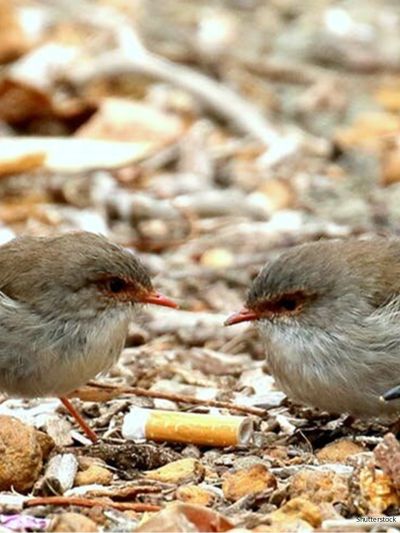
Cigarette filters are Australia's most littered item.
They are made from plastic, and are a cause of significant harm to our natural environment
Health experts have concluded that cigarette filters provide no meaningful health benefit while encouraging misconceptions about smoking safety.
Australia has reduced single-use plastics before. It's time to address the most littered item in our country. Cigarette filters belong in history books, not nature.
WHAT WE'RE CALLING FOR
A phase out of the sale of filtered cigarettes in Australia by 2030
- Table the topic of a filter phase out in the Meeting of Environment Ministers
- Request the Commonwealth Government Office of Impact Analysis (OIA) to undertake an analysis of the effects of a phase out on cigarette filters
- Conduct an assessment to understand powers to ban cigarette filters through existing legislation
- Hold a public consultation to obtain feedback on a ban on the sale of filtered cigarettes
- Phase out the sale of filtered cigarettes by 2030
Want to write your own letter?
If you’d prefer to send your own letter, you can click through to use our template and find the suggested contacts.
BACKGROUND ON THE ISSUE
As recently surfaced in a report by the CSIRO[i], cigarette filters are commonly the most littered item in Australia. The World Health Organization (WHO) Framework Convention for Tobacco Control (FCTC) recently adopted Article 18[ii], urging member states to take action on the environmental impacts of tobacco, including considering policy measures on cigarette filters. The WHO has previously called for a ban on cigarette filters[iii]. A report from the Belgian Superior Health Council[iv]has supported this position.
In Australia, a Doctors for the Environment Australia (DEA) submission[v]in November 2024 concluded that there is a scientific foundation to warrant a ban on cigarette filters. There is no evidence that cigarette filters have any health benefit and instead they perpetuate a false sense of security for smokers. Unknown to many smokers, substantially all cigarette filters sold are made of a plastic[vi]known as cellulose acetate. Cigarette filters are a problematic and avoidable plastic, which is known to cause harm to the environment, but not provide any benefit to human health.
With a motion[vii]approved by the South Australian Upper House in 2024 to take action (including discussing the issue at the next Environment Ministers Meeting); and an ongoing consultation[viii]in New South Wales, the Commonwealth should now lead a harmonised approach to addressing all tobacco waste. A phase out on cigarette filters should be considered, in line with the action set out in the March 2021 National Plastics Plan[ix]and the outcome indicated from the December 2025 EMM Communique[x]to prepare a harmonised list of unnecessary plastic products. Action on this topic would be consistent with the Activity Focus[xi]areas of HEPA for 2022-25.
Santa Cruz county (CA, USA) is the first known jurisdiction to announce a ban[xii] on the sale of filtered cigarettes, coming into effect from 2027. We would encourage a bold action by the Commonwealth to be the first globally to take action. Australia should be encouraged to act, independent of the ongoing meetings of the Intergovernmental Negotiating Committee on Plastic Pollution[xiii]for a Global Plastics Treaty.
References
[ii] https://storage.googleapis.com/who-fctc-cop10-source/Decisions/fctc-cop-10-14-en.pdf
[iii] https://www.who.int/news/item/31-05-2022-who-raises-alarm-on-tobacco-industry-environmental-impact
[v] https://www.dea.org.au/submissions
[vi] https://pubmed.ncbi.nlm.nih.gov/34139503/
[vii] https://hansardsearch.parliament.sa.gov.au/daily/uh/2024-09-25/57
[viii] https://yoursay.epa.nsw.gov.au/download_file/1308/677
[ix] https://www.dcceew.gov.au/environment/protection/waste/plastics-and-packaging/national-plastics-plan
[x] https://www.dcceew.gov.au/sites/default/files/documents/emm-communique-10-dec-2024.pdf
[xi] https://www.epa.vic.gov.au/about-epa/who-epa-works-with/hepa
[xii] https://tobaccoreporter.com/2024/10/11/california-santa-cruz-county-bans-sale-of-filtered-tobacco/
We acknowledge that our work takes place on the traditional lands of Indigenous Peoples around the world. We honour them as the original and continuing stewards who have cared for these beautiful lands and waters since time immemorial, and we recognise their profound and enduring connection to culture and community. We pay our respects to their Elders past, present and emerging, and to all Indigenous Peoples. As an organisation, we are committed to learning from and supporting Indigenous communities in our work.
